
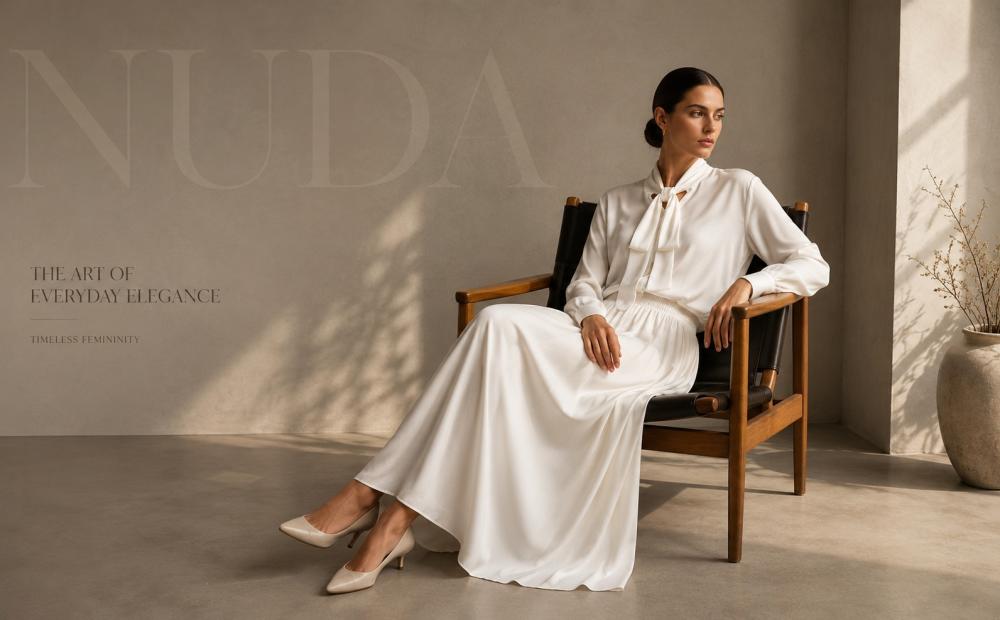
Not every day ends where it started.
A morning coffee can turn into lunch, a workday can lead to dinner, or a simple daytime plan can become an evening gathering. When there is little time to go home and change, having clothes that can move naturally between different parts of the day becomes less about convenience and more about having a wardrobe that works with your lifestyle.
The answer is not owning a separate outfit for every occasion.
It is choosing pieces that have enough versatility to change character with a few considered adjustments.
A dress can become more evening-ready with a change of shoes and accessories. A matching set can shift from relaxed to refined through layering and styling. A skirt can take on a completely different feel depending on what you wear with it.
The key is knowing which pieces can make the transition and what to change when the day moves into evening.
What Makes a Good Day-to-Night Piece?
The best day-to-night pieces usually sit somewhere between casual and formal.
They are polished enough to work after dark without feeling overdressed during the day.
Before choosing a piece, look for four qualities:
1. A Versatile Silhouette
Clean, considered shapes are usually easier to style in different directions.
A simple dress, coordinated set or well-cut skirt can become more casual or more refined depending on what surrounds it.
2. A Fabric That Works Across Settings
Fabric influences how a garment feels.
A lightweight piece may work beautifully during the day, while a more refined fabric can naturally lend itself to evening dressing.
Consider how the material looks and feels in both environments rather than choosing something that is designed exclusively for one occasion.
3. Comfortable Enough for the Day
If you know you will be wearing the same outfit for several hours, comfort matters.
You should be able to sit, walk and move naturally without constantly adjusting the garment.
A piece that looks beautiful but becomes uncomfortable after a few hours is unlikely to become a reliable day-to-night wardrobe staple.
4. Easy to Restyle
This is perhaps the most important quality.
Ask yourself:
What can I change without changing the entire outfit?
If the answer includes shoes, a layer, a bag or jewelry, the piece has strong transition potential.
Start With the Right Base
A successful day-to-night outfit does not begin with the evening accessories.
It begins with the piece you plan to wear throughout the day.
For NUDA's style of wardrobe, three particularly useful foundations are dresses, matching sets and skirts.
Each offers a different way to transition.
The Versatile Dress
A dress is one of the simplest foundations for a day-to-night wardrobe because the main silhouette is already complete.
During the day, keep the styling lighter and more relaxed.
Think:
- Flats or minimal shoes
- A practical daytime bag
- Simple jewelry
- A lightweight outer layer
As the day moves into evening, change the elements around the dress rather than replacing the dress itself.
Try:
- Dressier shoes
- A smaller evening bag
- More defined jewelry
- A refined outer layer
The important part is choosing the right dress from the beginning.
A piece that feels extremely casual may require too many changes to become evening appropriate. On the other hand, an overtly formal dress may feel out of place during the day.
Look for the middle ground.
The Matching Set
A matching set gives you another advantage: coordination is already built into the outfit.
This makes it particularly useful when you want a polished daytime look without spending too much time putting an outfit together.
For daytime, keep the styling understated.
A set can be paired with simple shoes and a practical bag for a relaxed finish.
For evening, the same set can take on a different character through:
- A more refined shoe
- A smaller bag
- Statement jewelry
- A change in layering
- A more defined silhouette
The set itself does not need to change.
The styling language around it does.
And because the pieces are separate, a well-chosen set can also continue working beyond the original outfit when worn individually.
The Versatile Skirt
A skirt can be one of the most adaptable pieces in a wardrobe because the top determines much of the final impression.
For daytime, pair a skirt with a simple top or relaxed layer.
For evening, change the upper half of the outfit to something with a more refined finish.
The same skirt can therefore move between settings without looking like you are wearing the exact same outfit twice.
This is especially useful when you want to build more combinations from a smaller selection of clothes.
The Three Elements That Transform a Look
You do not need to replace an entire outfit to change its mood.
In many cases, three elements do most of the work:
Shoes
Shoes can immediately change the visual direction of an outfit.
A simple daytime shoe can make a look feel relaxed and practical.
A more refined shoe can give the same base outfit a stronger evening presence.
This is why footwear should be considered when buying a day-to-night piece.
Ask:
Can I imagine this garment working with both my daytime and evening shoes?
If yes, you have more styling options.
Layering
A layer can change the structure and proportions of an outfit.
During the day, a lighter layer can keep the look relaxed.
Later, a more structured or refined layer can create a stronger evening silhouette.
The goal is not to add as many layers as possible.
It is to choose one that changes the relationship between the pieces.
Accessories
Accessories should support the transition rather than completely redefine the outfit.
A daytime look might call for simpler jewelry and a practical bag.
For evening, a smaller bag, more defined jewelry or another carefully chosen accessory can make the same clothing feel more considered.
The most effective changes are often small.
How to Transition From Day to Night Without Looking Overdressed
One common mistake is trying to make the outfit look "evening" too quickly.
You do not necessarily need dramatic jewelry, high heels and a completely different styling approach.
Instead, think about the degree.
If your daytime outfit is very casual, make one or two noticeable changes.
If the base outfit is already polished, smaller adjustments may be enough.
For example:
Relaxed daytime look
Simple dress + flats + daytime bag
↓
Evening transition
Same dress + refined shoes + smaller bag + jewelry
The clothes remain the same.
The context changes.
Build Around Pieces, Not Complete Outfits
A versatile wardrobe becomes more useful when you stop thinking only in complete outfits.
Instead of asking:
What outfit do I need for dinner?
Ask:
Which pieces I already own could work for dinner with a few changes?
This shift can help you identify the garments that deserve more space in your wardrobe.
A skirt that works with several tops is more useful than a skirt that only works with one.
A dress that works with both casual and refined accessories has more range than one that can only be worn to formal events.
And a matching set becomes particularly valuable when its two pieces can also work separately.
A Simple Day-to-Night Formula
When you are unsure how to build the transition, use this four-step approach.
Step 1: Choose the Base
Start with one versatile piece:
Dress + Set + Skirt
Choose something comfortable enough to wear throughout the day.
Step 2: Keep Daytime Styling Simple
Use your everyday shoes, practical bag and lighter accessories.
The goal is to make the base feel natural for the daytime setting.
Step 3: Identify What Can Change
Before leaving home, decide which elements you can switch later.
This might be:
- Shoes
- Bag
- Jewelry
- Layer
- Styling of the garment itself
You do not need to change everything.
Step 4: Increase the Level of Refinement
When evening arrives, make the smallest number of changes that create the biggest difference.
This keeps the look cohesive instead of making it feel like two unrelated outfits.
Three Day-to-Night Outfit Formulas
Formula 1: Dress
Day:
Versatile dress + simple shoes + practical bag
Night:
Same dress + refined shoes + smaller bag + elevated jewelry
Best for: Dinner, social plans and occasions where you want a complete silhouette.
Formula 2: Matching Set
Day:
Matching set + understated shoes + relaxed accessories
Night:
Same set + refined shoes + structured bag + stronger jewelry
Best for: Days that move between casual plans and a more polished evening setting.
Formula 3: Skirt
Day:
Skirt + simple top + comfortable shoes
Night:
Same skirt + more refined top + dressier shoes + evening accessories
Best for: When you want the freedom to change the character of the outfit rather than the entire outfit.
How to Shop for Versatility
When buying a new piece, do not judge it only by the occasion you have in mind.
Ask yourself a few questions first:
Can I wear it during the day?
Can I dress it up without changing the entire look?
Does it work with shoes I already own?
Can I style it with more than one bag or layer?
If it is separate, can I wear it with something else?
If the answer is yes to several of these questions, the piece has a stronger chance of becoming part of your regular wardrobe rather than a one-time purchase.
Day-to-Night Does Not Mean One Outfit for Every Occasion
Versatility does not mean forcing one piece to work everywhere.
A daytime dress does not automatically become appropriate for a formal evening event simply because you add heels.
The setting still matters.
A casual dinner, a wedding, a professional event and an evening celebration can all require different levels of dressing.
The goal of a day-to-night wardrobe is not to eliminate those differences.
It is to make the transition between compatible settings easier.
Think:
Coffee → Lunch → Dinner
or
Work → Dinner
rather than trying to make one outfit suitable for every possible occasion.
The Best Versatile Pieces Are the Ones You Will Actually Wear
Versatility sounds attractive, but it only matters when it reflects your real life.
If you rarely wear skirts, buying one because it can supposedly create ten outfits will not make your wardrobe more versatile.
If you prefer dresses, build around dresses.
If matching sets naturally fit the way you dress, make them part of your wardrobe foundation.
The goal is not to maximize the number of combinations on paper.
It is to choose pieces that you will genuinely reach for.
Build a Wardrobe That Moves With Your Day
A useful wardrobe should not require you to start from zero every time your plans change.
The right dress can move from daytime to dinner.
A matching set can shift from relaxed to refined.
A skirt can take on a completely different character with a new top.
The difference is rarely the number of clothes you own.
It is how well the pieces can adapt.
At NUDA, versatile silhouettes and coordinated pieces are designed to work across different moments, giving you more ways to build a wardrobe that feels personal, considered and practical.
Explore Dresses, Sets and Skirts to find pieces that can become part of your day-to-night wardrobe.