
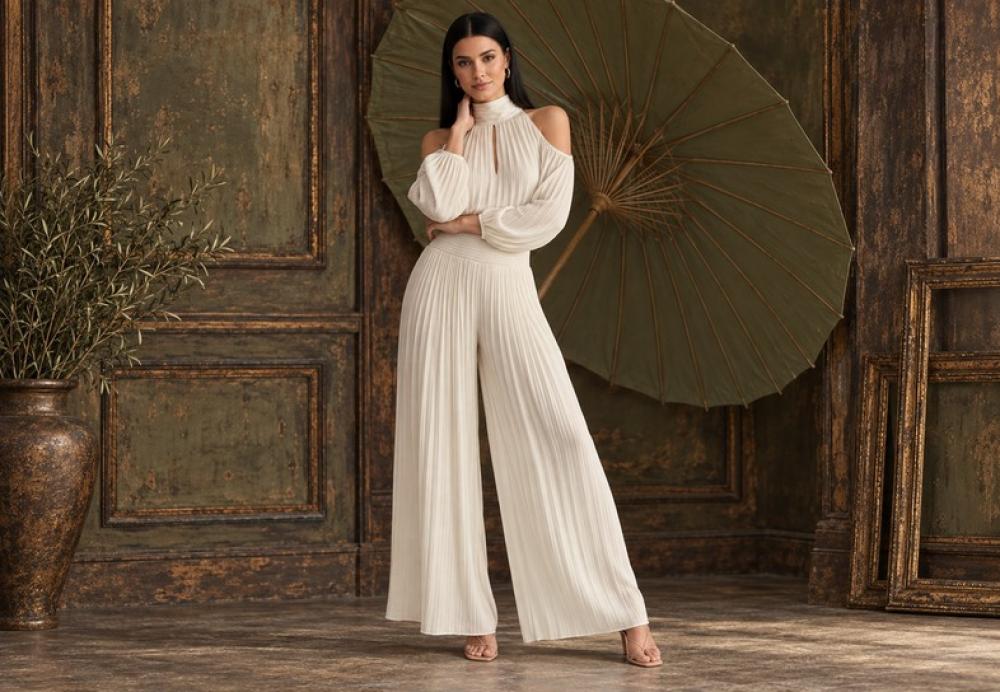
A trouser can technically fit at the waist and still feel entirely wrong.
The rise may sit at an awkward point. The fabric may collect through the hips instead of falling cleanly. A wide leg may lose its line because the hem is too short, while a straight cut may appear wider than expected when it is made from a fluid knit.
This is why choosing trousers online involves more than finding the correct size. You also need to understand the cut: where the trousers sit, how they move away from the body and what the fabric does once the garment is worn.
Straight, wide-leg and relaxed are often used as if they describe the same thing. They do not. Each term refers to a different aspect of the silhouette, and understanding that distinction makes it easier to choose trousers that work with your wardrobe and the way you prefer to dress.
Trouser Cut and Trouser Fit Are Not the Same
The cut describes the shape created by the garment.
The fit describes how closely the trousers sit against the body.
A pair of trousers can therefore have:
- A straight cut with a relaxed fit
- A wide-leg cut with a more defined waist
- A straight leg with a close fit through the hips
- A relaxed fit with either a straight or wider hem
This distinction matters when reading a product description. “Relaxed” does not tell you the exact width of the leg, just as “wide-leg” does not tell you whether the waist and hips will feel loose or structured.
Before choosing, look for information about the full construction:
- Rise
- Waistband
- Hip fit
- Thigh width
- Shape from knee to hem
- Full length
- Fabric weight
- Stretch and recovery
- Intended drape
The most useful description is not a single label. It is the relationship between these details.
What Are Straight-Leg Trousers?
Straight-leg trousers maintain a relatively consistent line from the thigh or knee towards the hem.
They are not necessarily narrow. Some straight cuts sit closer through the hips and thighs, while others are relaxed from the waist down. The defining feature is that the lower leg does not flare dramatically or narrow sharply towards the ankle.
Visually, a straight leg creates a clear vertical line. It can feel understated, controlled and easy to place within different wardrobes.
Straight-leg trousers are particularly useful when you want:
- A clean silhouette without a close-fitting lower leg
- Trousers that work with both longer and shorter tops
- A cut that can move between casual and more polished settings
- A line that does not rely heavily on trend-led proportions
- Trousers that can sit beneath cardigans and longer layers without creating excessive volume
NUDA’s Dark Beige Pants demonstrate a relaxed interpretation of the straight leg. Their soft knit finish gives the line movement, while the consistent shape through the leg keeps the silhouette clean.
The result is not sharp tailoring. It is a softer form of structure: trousers that fall in a clear line without appearing rigid.
What Are Wide-Leg Trousers?
Wide-leg trousers create more volume from the upper leg down to the hem.
Unlike flared trousers, which usually widen noticeably from the knee, a wide-leg cut introduces volume much earlier. Depending on the design, that width may begin at the hip, upper thigh or just below the waistband.
The quality of the silhouette depends heavily on fabric and length.
A fluid fabric allows the leg to move and fold as you walk. A firmer fabric holds the width more visibly, creating a stronger architectural outline. Neither result is inherently better, but they produce different impressions.
Wide-leg trousers work particularly well when you want:
- More movement through the lower half of the outfit
- A long, uninterrupted line
- Space through the thigh and leg
- A contemporary alternative to narrow trousers
- A silhouette that can feel relaxed or refined depending on the fabric
The trousers in the Brown Out Set use a wide, fluid leg with an elasticated drawstring waist. Their satin finish gives the volume softness rather than stiffness, allowing the leg to move instead of holding a sharply tailored shape.
This is an important distinction. Wide-leg trousers made in fluid satin will not behave like wide-leg trousers made in structured wool or cotton.
What Does Relaxed Fit Mean?
Relaxed fit refers to ease rather than a specific leg shape.
A relaxed trouser is designed to leave more space between the garment and the body. That ease might appear at the hips, thighs, rise or throughout the complete silhouette.
A relaxed fit should not simply look like an incorrectly chosen larger size.
When the pattern is intentionally relaxed:
- The waist should still sit securely.
- The rise should fall in the intended position.
- The side seams should remain balanced.
- The extra volume should look deliberate.
- The fabric should move without collapsing awkwardly.
Sizing up in a fitted trouser does not always create the same result. It may enlarge the waistband, shift the rise and lower the crotch without providing well-placed ease through the areas that need it.
The Almond Pants combine a relaxed fit with a straight-leg silhouette. Made from a soft wool fabric, they provide ease of movement while retaining a relatively clean vertical line.
That makes them useful for understanding the difference: the fit is relaxed, but the cut remains straight.
Straight vs Wide-Leg vs Relaxed Trousers
These terms become easier to compare when their functions are separated.

This is why a complete product description matters. A shopper choosing only between the words “straight” and “wide” may miss the details that influence comfort and proportion more directly.
Begin with the Rise
The rise is the distance between the crotch seam and the top of the waistband. It determines where the trousers sit and affects how the entire garment relates to the torso.
High-Rise Trousers
A high rise sits closer to the natural waist. It creates a longer visual line through the leg and works well with tops that finish near the waistband or are tucked in.
A high rise should sit smoothly. If the waistband moves away from the body at the back or the fabric pulls sharply across the front, the issue may relate to the rise, waist-to-hip proportion or size.
Mid-Rise Trousers
A mid rise sits between the natural waist and the upper hip. It can feel less defined through the waist and may work well when you prefer a softer transition between the top and trousers.
Lower-Rise Trousers
A lower rise sits closer to the hips. Because the waistband falls at a wider part of the body, its measurement should not be compared directly with a natural-waist measurement.
The rise is not merely a styling decision. It changes where the waistband sits, how the hips are shaped and how much room is needed through the front and back of the trousers.
Look at the Hip and Thigh Before the Hem
The width of the hem may define the name of the cut, but the fit is often decided higher on the body.
Check how the trousers sit through:
- The upper hip
- The fullest part of the hip
- The seat
- The upper thigh
- The front rise
Diagonal pulling lines often indicate that the fabric is under tension. Excess fabric collecting beneath the seat or around the upper thigh may mean the shape of the garment does not correspond with the intended fit.
The goal is not to eliminate every fold. Trousers move with the body, and fluid materials naturally create soft folds. The distinction lies between movement and strain.
A considered fit allows the fabric to fall from the hip without being pulled out of its intended line.
Fabric Changes the Meaning of the Cut
The same pattern can look entirely different in two fabrics.
Soft Knit
Knit tends to follow movement and create a softer edge. In the Dark Beige Pants, the knit finish gives the relaxed straight leg a less formal character while preserving its clean shape.
Because knit can vary significantly in stretch and recovery, never assume that all knitted trousers behave alike. Check the product information and size guide for the individual piece.
Wool
Wool can provide warmth, texture and a more substantial fall. The final effect depends on weight and construction: some wool trousers hold their shape firmly, while softer variations create a more relaxed line.
The Almond Pants use soft wool with a relaxed straight-leg silhouette, positioning them as a comfortable winter option rather than sharply tailored trousers.
Satin-Finish Fabric
A satin surface reflects light and makes folds more visible. When used in a wide leg, it can produce a fluid, almost liquid movement.
The Brown Out trousers pair this finish with an adjustable waist, giving the silhouette an informal ease while retaining an evening-ready surface.
Fluidity, however, does not automatically mean stretch. The waist, hips and rise should still be checked against the product’s measurements.
For guidance on maintaining different materials after purchase, refer to NUDA’s complete clothing care guide.
How Long Should Trousers Be?
The correct length depends on the cut, shoe and intended silhouette.
Straight-Leg Length
A straight leg can finish at the ankle, meet the top of the shoe or fall slightly longer. The hem should look deliberate rather than stopping at an uncertain point.
A shorter straight leg creates a clearer separation between the trousers and shoe. A full-length version gives the silhouette more continuity.
Wide-Leg Length
Wide-leg trousers often need enough length to allow the fabric to fall vertically.
If the hem is too short, the width may appear disconnected from the rest of the silhouette. If it is too long, the fabric may collapse around the feet and become impractical.
Try the trousers with the type of footwear you expect to wear most frequently. A length chosen for heels may sit differently with flats.
Relaxed Trouser Length
With relaxed trousers, some movement and softness at the hem may be intentional. Even so, excessive fabric collecting over the shoe can interrupt the line and create unnecessary wear.
When buying online, measure the inseam of a pair you already like and compare it with the product information whenever the garment length is provided.
How Should Trousers Fit at the Waist?
The waistband should feel secure without digging into the body or shifting continuously during movement.
For a fixed waistband, check that you can sit comfortably and breathe normally. A waistband that fits only while standing will not work through a full day.
An elasticated or drawstring waist offers adjustment, but it should not be used to compensate for trousers that are significantly too large through the hips or rise.
With the Brown Out trousers, for example, the drawstring provides flexibility at the waist. The way the trousers fall through the hips and leg still determines whether the complete silhouette fits as intended.
Which Trouser Cut Should You Choose?
Rather than following a fixed rule based on body shape, begin with the result you want and the way the trousers will be worn.
Choose a Straight Leg When:
- You want a clear, consistent vertical line.
- You prefer moderate rather than dramatic volume.
- You need trousers that work beneath longer layers.
- You want a cut that can move easily between seasons.
- You wear both relaxed and more refined tops.
Choose a Wide Leg When:
- You want movement and volume to define the outfit.
- You prefer trousers that fall away from the leg.
- You are prepared to check the length carefully.
- You want the lower half of the outfit to carry more visual presence.
- You like fluid or architectural silhouettes.
Choose a Relaxed Fit When:
- Freedom of movement is a priority.
- You prefer ease through the hips and thighs.
- Your wardrobe is built around softer, less rigid tailoring.
- You want comfort without simply buying a larger size.
- The fabric and waistband still provide enough definition.
These categories can overlap. You may ultimately choose relaxed straight-leg trousers or relaxed wide-leg trousers. The goal is to understand which element of the design is creating the result you prefer.
How to Balance Trouser Proportions
There is no requirement to pair wide trousers only with a fitted top.
A close-fitting top creates a clear contrast with a wider leg, but a relaxed top can also work when the proportions are intentional.
Consider:
- Where the top ends in relation to the waistband
- Whether the waist remains visible
- The combined volume of the top and trousers
- The weight and movement of both fabrics
- The length of any cardigan or outer layer
NUDA’s approach often uses tonal dressing and coordinated separates to create continuity rather than sharp contrast. The result feels composed because the fabric, color and line relate to one another.
For more ways to use coordinated pieces beyond a single look, explore the guide to building a modern capsule wardrobe.
Common Trouser Fit Mistakes
Choosing by Leg Width Alone
A wide hem does not reveal how the trousers fit at the waist, hips or rise. Review the complete construction.
Sizing Up to Create a Relaxed Fit
A larger size may shift the waistband and rise rather than adding well-placed ease. Choose a pattern designed with a relaxed fit.
Ignoring the Rise
Two trousers with identical waist measurements can feel different if one sits at the natural waist and the other sits closer to the hips.
Assuming Fluid Fabric Will Stretch
Drape and stretch are different properties. A fabric may move softly without expanding around the body.
Forgetting the Intended Shoes
Footwear changes where the hem falls and how the leg breaks. Check the length with your likely shoes before deciding whether alterations are needed.
Treating Every Fold as a Fit Problem
Some folds are created by movement and soft fabric. Look instead for repeated pulling, twisting seams or tension around the waist and hips.
Choosing According to Height Alone
Height does not determine torso length, rise or inseam. Use actual measurements rather than a general petite or tall assumption.
A Trouser Checklist Before Buying Online

Finding the Right Trouser Cut at NUDA
The right trousers do not need to follow one universal silhouette.
A relaxed straight leg can create a soft, clean foundation. A fluid wide leg can bring movement and presence. A heavier fabric can make the same amount of volume appear more structured, while knit or satin allows it to move more freely.
Start with the rise and waistband. Then assess the hips and thighs before considering the leg shape and length. Finally, read the fabric and cut together.
Explore the relaxed straight line of the Dark Beige Pants, the soft wool construction of the Almond Pants, or the fluid wide-leg silhouette of the Brown Out Set.
Choose according to how the trousers are constructed and how you want them to live within your wardrobe, not according to the name of the cut alone.
Frequently Asked Questions
What is the difference between straight-leg and wide-leg trousers?
Straight-leg trousers maintain a relatively consistent line towards the hem. Wide-leg trousers introduce more volume through the leg, often beginning at the hip or upper thigh.
Is relaxed fit the same as wide-leg?
No. Relaxed fit describes the amount of ease between the garment and the body. Wide-leg describes the shape and width of the leg. Trousers can be both relaxed and wide-leg, or relaxed and straight-leg.
How should straight-leg trousers fit?
They should sit securely at the waist, allow comfortable movement through the hips and thighs, and maintain a clean line towards the hem without excessive pulling or twisting.
How long should wide-leg trousers be?
The length should support the intended vertical line without dragging on the floor. Check it while wearing the type of shoes you expect to pair with the trousers.
Should I size up for a relaxed trouser look?
Not necessarily. Choose trousers designed with an intentionally relaxed fit. Sizing up in a fitted pattern can distort the waist, rise and overall proportions rather than creating controlled ease.