
Packing for a trip often starts with a familiar question: what if I need something I have not brought?
A second dress goes into the suitcase, followed by an extra top, another pair of shoes and a few pieces that might be useful. By the time you leave, you have plenty of clothes but no clear idea of what you will actually wear.
A travel capsule wardrobe offers a more practical approach. Instead of packing a collection of unrelated outfits, you choose a smaller group of clothes that suit your itinerary and work together.
The aim is not to fit your entire wardrobe into a carry-on or follow a strict number of pieces. It is to arrive with the clothes you need, enough variety to feel like yourself, and fewer unnecessary decisions.
What Is a Travel Capsule Wardrobe?
A travel capsule wardrobe is a selection of clothing planned around a particular trip. Each piece has a purpose, and several pieces can be combined in more than one way.
Unlike an everyday capsule wardrobe, it has a defined time frame and a specific set of requirements. A week in a city, a business trip and a coastal holiday may all call for different clothes.
The most useful travel wardrobe is therefore built around your plans, not a universal packing list.
Start With Your Itinerary, Not Your Closet
Before choosing any clothes, write down what you expect to do.
You do not need a detailed schedule for every hour. A simple overview is enough:
- Travel days and long journeys
- Sightseeing or daytime activities
- Lunches and casual gatherings
- Dinners or evening plans
- Professional or formal occasions
- Any activity requiring specific clothing
Next, check the weather forecast, including expected temperature changes and rain. Consider whether you will be walking extensively, spending time outdoors or moving between different environments.
Also check any dress requirements for venues, cultural sites or events. A beautiful outfit is not useful if it does not suit the place you are visiting.
This gives you a much clearer starting point than packing according to what looks appealing in your wardrobe.
Create an Outfit Plan Before You Pack
The easiest way to avoid overpacking is to plan outfits before selecting the final pieces.
Start with the occasions that have the most specific requirements. If you have a formal dinner, professional event or activity that requires particular clothing, plan for that first.
Then identify which of those pieces can also work elsewhere.
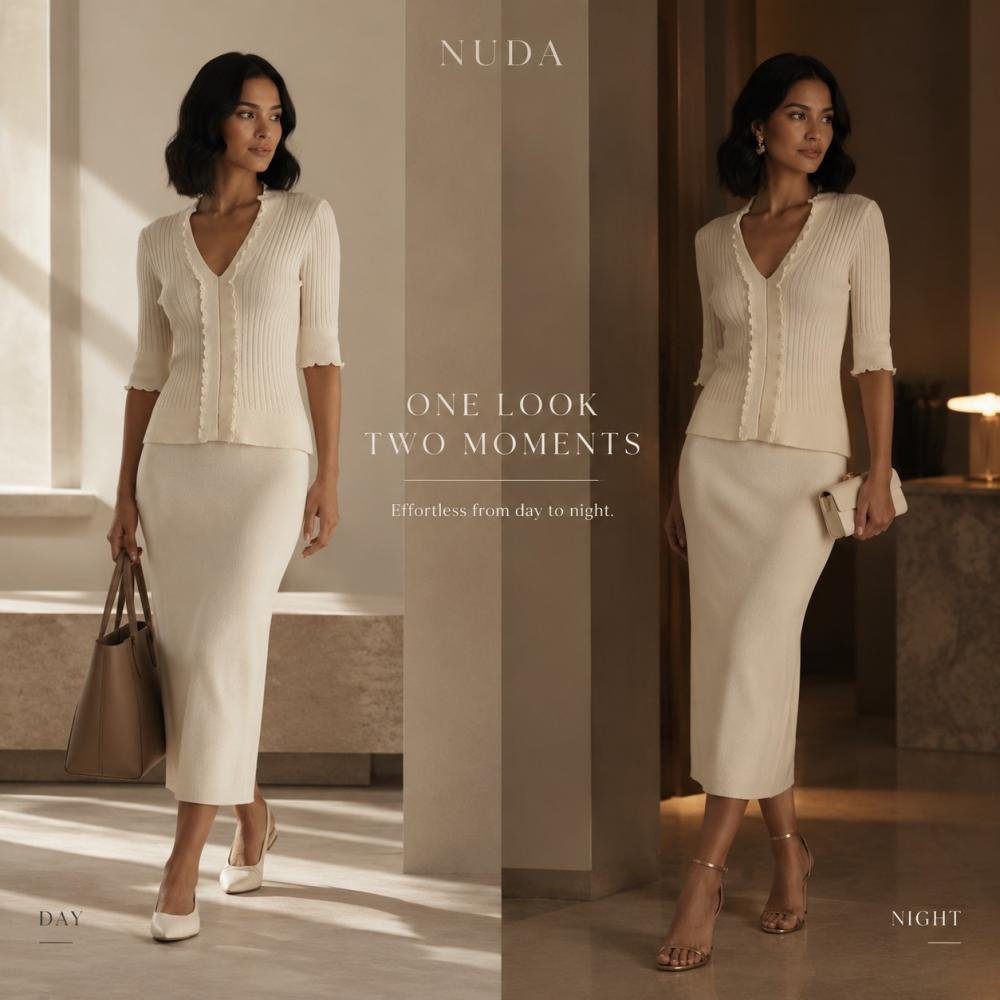
For example, a skirt chosen for dinner might work with a simpler top during the day. A matching set might be worn together for one occasion and separately on other days.
The goal is to create useful overlap between outfits without forcing every garment to work for every situation.
Use a Simple Planning Table

You can repeat pieces across the table. That is the point of the exercise.
Once every important occasion has an outfit, you can see which clothes are genuinely necessary and which are only being packed "just in case."
Choose Pieces That Earn Their Place
A versatile piece is not simply one that can be styled in many theoretical ways. It is one that works for the actual plans you have made.
Before adding something to your suitcase, ask:
Where will I wear it?
What will I wear it with?
Does it suit the weather and activity?
Will I be comfortable wearing it for the required length of time?
If you cannot answer these questions, the piece may not need to come with you.
A Matching Set That Works Separately
A matching set can be useful for travel because it gives you a complete outfit and the possibility of wearing the pieces independently.
However, that versatility should be tested rather than assumed.
Try the top with another bottom you plan to pack. Then try the bottom with a different top. If both combinations work, the set may offer more practical value than a single-use outfit.
If the pieces only look right together, treat the set as one complete look rather than counting on combinations you are unlikely to wear.
A Dress With More Than One Purpose
A dress can be a useful choice when you want a complete outfit without coordinating separates.
Choose it according to your itinerary. A dress that works for a casual lunch may not be suitable for a formal dinner, and an evening dress may not be practical for a day of walking.
If one dress genuinely suits two occasions, that can reduce what you need to pack. If it does not, there is no reason to force it.
Separates That Work With Your Existing Clothes
Trousers, skirts and tops are useful when they create combinations you would actually wear.
Rather than packing several statement pieces that each require a different outfit, look for items that share compatible proportions, fabrics and colors.
You do not need an entirely neutral wardrobe. You need a wardrobe in which the pieces make sense together.
Build a Color Palette That Makes Packing Easier
A consistent color palette can reduce the number of shoes, bags and layers you need.
Start with two or three colors that already work well in your wardrobe. Add an accent color or print if it complements the pieces you have chosen.
For example, a palette of cream, brown and black could support several combinations without requiring every garment to be the same shade.
The important part is not choosing a particular set of colors. It is checking that your selected tops and bottoms can be worn together.
Lay the pieces out before packing. If an item only works with one other garment, decide whether that combination is important enough to justify the space.
A Practical Seven-Day Travel Capsule Example
There is no ideal number of garments for every seven-day trip. The following is an illustrative starting point for a trip with a mix of city activities, casual meals and a few evening plans.
It assumes moderate weather, no specialist activities and the possibility of repeating some pieces. Adjust it for your own needs.

This is not a rule or a promise that every item will create a certain number of outfits. It is a framework for checking whether you have enough clothing for your plans.
Underwear, sleepwear, activity-specific clothing and other personal essentials should be planned separately according to the trip.
Example Outfit Combinations
Using the pieces above, a possible plan could include:
Travel: Comfortable trousers + top + layer
City day: Skirt + top + walking shoes
Casual lunch: Matching set worn together
Dinner: Dress + appropriate evening shoes
Another daytime plan: Set top + separate trousers
Another evening: Set bottom + refined top
The value comes from having combinations you have already tried, not from claiming that a small number of garments will automatically create dozens of looks.
Plan for Laundry and Repeat Wear
The length of your trip does not necessarily determine how many outfits you need. Laundry access and the ability to repeat garments matter just as much.
Before packing, find out whether you will have access to laundry facilities or a reliable laundry service. If you do, you may be able to bring fewer everyday pieces.
If you do not, plan enough clothing for your actual needs, particularly items worn close to the body.
Consider the climate, how much you expect to perspire, the type of activities planned and how quickly your garments can be cleaned and dried according to their care instructions.
Do not assume that every fabric can be washed in a hotel sink or dried overnight. Always follow the garment's care label.
Choose Fabrics for the Trip You Are Taking
Fabric choice affects comfort, maintenance and how practical a garment will be while traveling.
For warm destinations, consider the garment's breathability, weight and how it feels in the expected conditions. For cooler or changeable weather, think about layering and appropriate protection from the elements.
Also consider how much care the piece requires.
A garment that needs specialist cleaning or careful pressing may still be worth packing for an important occasion, but it may not be the most practical choice for repeated everyday wear.
Before traveling, check the care label and test how the garment behaves after being folded or packed. Different fabrics and constructions can respond differently, so avoid assuming that a material is always wrinkle-free, quick-drying or easy to maintain.
Pack Shoes Around Activities
Shoes often take up more suitcase space than clothing, so choose them based on what you will actually do.
Start with the pair you need for the most demanding part of the trip, such as extensive walking. Then consider whether you need a separate pair for everyday use or a more formal occasion.
Try your planned outfits with the shoes before packing. A pair that looks versatile in isolation may not work with the hems or proportions of the clothes you have chosen.
If you are traveling with limited luggage, wearing your bulkiest comfortable pair during transit can help save space, provided it is suitable for the journey.
How to Pack Clothes Without Creating Unnecessary Wrinkles
Good packing starts with preparation.
Make sure garments are clean and completely dry before placing them in your suitcase. Fold or roll them according to their fabric and construction, and avoid compressing delicate pieces unnecessarily.
Packing cubes can help separate clothing categories and keep your suitcase organized. They do not eliminate wrinkles, but they can make it easier to find what you need without unpacking everything.
For garments that crease easily, consider using a garment folder or packing them with fewer folds. Delicate fabrics may benefit from protective layers or a garment bag.
Once you arrive, unpack pieces that need to hang and follow their care instructions. Do not apply heat or steam without checking whether the fabric and garment construction allow it.
Keep a Small Arrival Kit Accessible
If you are arriving after a long journey, it helps to keep a few essentials easy to reach.
Depending on your plans, this might include a change of top, essential toiletries, medication, travel documents and anything you may need before accessing your main luggage.
Keep important medication and valuables in your hand luggage, subject to airline and security requirements.
This is not part of the fashion capsule itself, but it can make the first hours of a trip considerably easier.
What Should You Leave Behind?
The final edit is often the most useful part of packing.
Look at everything you have selected and remove pieces that do not have a clear purpose.
Common candidates include:
- A second item that serves exactly the same purpose as another
- Shoes that work with only one outfit
- A garment you have never worn and are unsure how to style
- An outfit that does not suit any confirmed plan
- A delicate piece that requires more maintenance than you can manage
- Extra clothing packed only because you have not checked the weather or itinerary
You do not need to eliminate every optional item. If you have room and genuinely want to bring something, that is a valid choice.
The aim is to pack intentionally, not to turn travel into a competition over who can bring the least.
Your Final Travel Wardrobe Checklist
Before closing your suitcase, check that you have covered the practical requirements of your trip.
- I have checked the weather and expected temperature changes.
- I have planned outfits for any formal or activity-specific occasions.
- Every main clothing piece has a clear purpose.
- I have tried the combinations I intend to wear.
- My shoes work with the planned outfits.
- I have considered laundry and repeat wear.
- I have checked the care instructions for delicate garments.
- I have included suitable layers and any required coverage.
- I have packed personal essentials separately.
- My luggage meets the airline's current size and weight requirements.
Build a Travel Wardrobe That Fits Your Plans
An elegant travel capsule wardrobe is not defined by a fixed number of pieces or a particular color palette.
It is a wardrobe that has been planned with your destination, activities and personal style in mind.
A coordinated set may give you several useful combinations. A dress may solve a specific occasion. A skirt or pair of trousers may become the foundation for multiple days.
What matters is that every piece has a reason to be there.
At NUDA, you can explore Sets, Dresses and versatile separates to find pieces that suit your travel plans and work with the wardrobe you already own.
Choose what you will genuinely wear, plan the combinations before you leave, and give yourself the freedom to enjoy the trip rather than spend it deciding what to put on.